
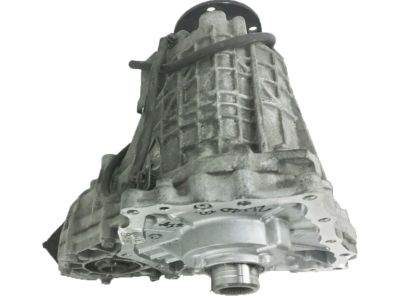
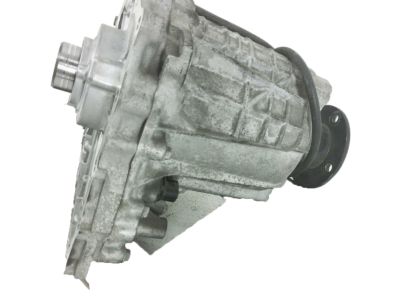
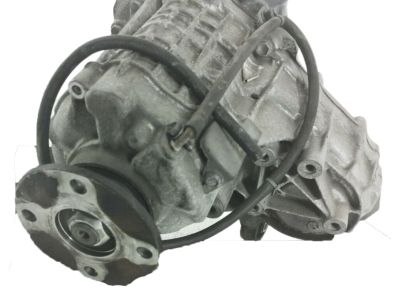
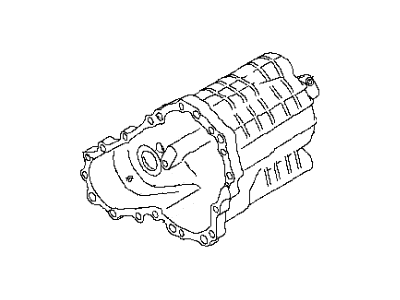
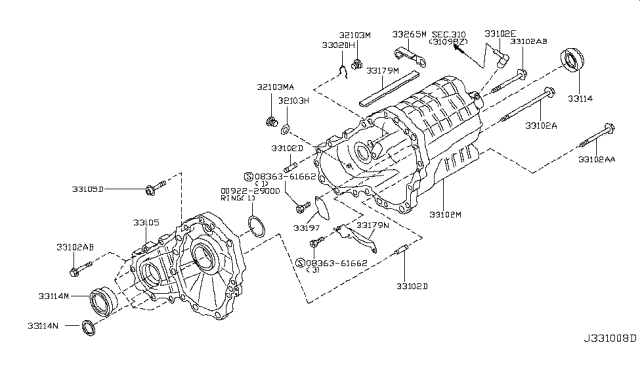
Apply the parking brake, then raise the front of the vehicle and support it securely on jackstands. Drain the transfer case lubricant. For the front oil seal, remove the front driveshaft. Carefully pry the seal out of the transfer case. Lubricate the new seal with clean transfer case lubricant, then install the seal using a seal driver or a large socket with an outer circumference slightly smaller than that of the seal. Install the driveshaft. Fill the transfer case with the proper lubricant. For the rear oil seal, detach the front of the rear driveshaft from the transfer case flange. A flange holding tool will be required to keep the transfer case flange from moving while the self-locking flange nut is loosened. A chain wrench will also work. Remove the flange nut. Obtain a new nut for installation. Apply match marks on the flange and the transfer case output shaft. Withdraw the flange. It may be necessary to use a two-jaw puller engaged behind the flange to draw it off. Do not attempt to pry or hammer behind the flange or hammer on the end of the pinion shaft. Pry out the old seal and discard it. Lubricate the lips of the new seal with a clean transfer case lubricant, then install the seal using a seal driver or a large socket with an outer circumference slightly smaller than that of the seal. Install the seal to a depth of 17/64 to 9/32-inch (6.7 to 7.3 mm). Install the flange, aligning the marks made. If necessary, tighten the nut to draw the flange into place. Do not try to hammer the flange into position. Apply a bead of RTV sealant to the ends of the splines visible in the center of the flange so it will be sealed in. Install a new flange nut. Tighten the nut to the torque. Reconnect the driveshaft to the transfer case flange. Fill the differential with the specified fluid.