My Garage
My Account
Cart
Genuine Infiniti G35 Brake Booster
Brake Power Booster- Select Vehicle by Model
- Select Vehicle by VIN
Select Vehicle by Model
orMake
Model
Year
Select Vehicle by VIN
For the most accurate results, select vehicle by your VIN (Vehicle Identification Number).
13 Brake Boosters found
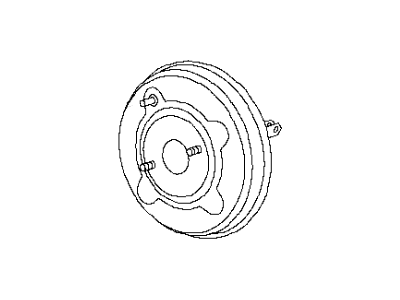
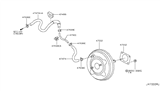
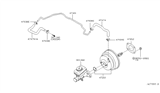
Infiniti G35 Brake Booster Assembly
Part Number: D7210-EY02C$747.02 MSRP: $1024.72You Save: $277.70 (28%)Ships in 1-3 Business Days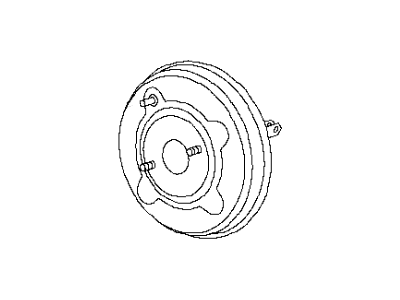
Infiniti G35 Brake Booster Assembly
Part Number: 47210-AC425$783.16 MSRP: $995.75You Save: $212.59 (22%)Ships in 1-2 Business Days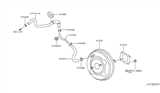
Infiniti G35 Brake Booster Assembly
Part Number: D7210-JK02A$592.44 MSRP: $816.03You Save: $223.59 (28%)Ships in 1-2 Business Days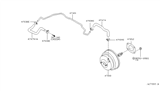
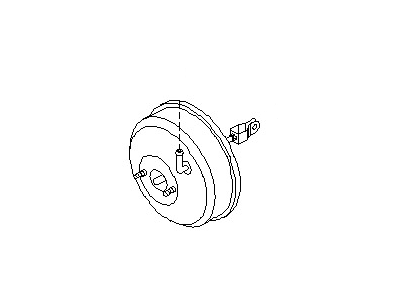
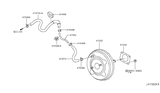
Infiniti G35 Brake Booster
The Infiniti G35 Brake Booster gives drivers confident stopping power by magnifying foot pressure on the pedal, so little effort still delivers firm clamp force at the wheels. Many Infiniti models in this line rely on a vacuum type Brake Booster that sits between the pedal linkage and master cylinder, its sealed chamber holding engine vacuum on both sides of a diaphragm until braking begins, and this Brake Booster setup opens to outside air when you press the pedal, creating a pressure gap that drives a power piston and boosts hydraulic fluid toward the calipers. In recent Infiniti updates the concept stays the same. Some G35 editions also fit a hydraulic style Brake Booster fed by power steering or an electric pump, providing steady assist when engine vacuum is weak, a useful upgrade across the G35 family. Both layouts chase the same goal, yet the vacuum style remains simpler and proven, while the hydraulic style offers reliable help during turbocharging or high altitude trips. Whichever design is present, the Brake Booster keeps pedal feel light and stopping distances short for every Infiniti driver piloting a G35.
Wondering where to find exceptional quality and economically-priced OEM Infiniti G35 Brake Booster? You are at the proper online store. We offer all genuine Infiniti G35 Brake Booster with a manufacturer's warranty at unbeatable prices. Order now and you can get brand-new parts at your door step with our fast shipping times.
Infiniti G35 Brake Booster Parts Questions & Experts Answers
- Q:How to inspect Brake Booster and check for potential brake system defects on Infiniti G35?Posted by April J.A:In addition to the established time frames, the brakes must be checked every time when the wheels are taken off or in case of any suspicion of a defect. Potential defects in a brake system can be indicated by one of the following symptoms: The vehicle pulls to one side when you press on brake pedal; the brakes make a noise like they are squalling or dragging or there is too much movement of the brake pedal; pulsating pedal; or leakage of brake fluid that often happens inside a tire or wheel. First, loosen your wheel lug nuts and secure your vehicle on jackstands so as to inspect disc brakes. Accessing two pads in every caliper requires that we remove these wheels. Look at each end of the caliper and through inspection window in caliper body to ascertain pad thickness. If lining material is thinner than thickness then replace the pads. In this case, pads should be removed for closer inspection because it is difficult to determine an exact thickness otherwise. Scrub and check them with either ruler or vernier calipers after spraying them with brake cleaner solution. Having some service life still left for it, measure the disc thickness using micrometers. If any single disc falls below minimum prescribed thickness substitute it with another one. Before fixing back tyres check all hoses including brake lines for damage, wear and tear, deformity, cracks, corrosion, leakages, kinks and twists and clamps for stall as well as connections for leaks also making sure that there are no sharp edges touching all pipes including those made from rubber as well as anything which moves inside and outside your vehicle. Sit in driver's seat and perform a series of tests while checking on whether he booster works properly. Lastly before driving away from any dangerous place like hill park the car there applying neutral gear then engage parking brake if its fails roll away you might need adjustment.Answered by Infiniti Parts Specialist Bryant / Jun 22, 2023